On the Concept of Voice in Evil
Lets talk about evil.

During my time as a linguistics student, I have found myself fascinated not just by how meaning is constructed. But also how one imposes different meanings through the way of which the sentences are expressed. Those who are not completely aware of the phenomenon, there is a Simpsons clip that will provide a fun demonstration of it. You know the one that I am talking about:
One can say the same thing in a different tone to elicit two different outcomes depending on the speech act.
While this is all well and good in relation to Simpsons satire of real estate salespeople. This can be used in less savoury ways. Like in politics and public discourse.
Do you remember the SJW destroyed compilations that flooded YouTube during the 2010s? I do, and they were annoying as hell as they reduced the ritual of debate into a spectacle of winning and owning the opposition. Never mind that these were college kids that don’t have the years of public speaking skills that these so-called bastions of free speech had/have. They were not interested in free good faith discourse, but rather fighting a war of discourse against a political opponent. Do be sure to capture and memeify any outbursts from these annoying college kids to continue the good faith discussion.
I won’t pretend that these kids made the best arguments. But their opinions and thoughts were at the end of the day secondary to the main point. That being that these college students are stupid, hysterical and a symptom of a larger societal ill. The viewers of those videos are not interested in being persuaded by the college student. They are interested in having their own opinions validated by confirming that college doesn’t educate people but rather indoctrinates them.
It is also important to note that in the times when one of these college students does have an emotional meltdown in a moment of high emotional intensity. You know what that entails, the rising of the voice when screaming about the validity of trans people, that sort of thing.That melt down is then used to indicate the irrationality of the opposition. Because of how the opinion is expressed, the viewer is less likely to side with the one being emotional then the one that isn’t. The opposition, the one that doesn’t believe in the validity of trans people, is cool, calm and collected.
https://t.co/PVdINmsHXs pic.twitter.com/Bw5YUCI2xL
— The White House (@WhiteHouse) March 27, 2025
A similar version of this played out in the 80s, the gay rights movement had to be more cool then the religious people in positions of power. These people believed the AIDs epidemic was a divine punishment from God. Let’s not even say anything about the government that couldn’t care about it until they were forced to. LGBT activists had to not only be visible but also human in the eyes of the normal hetrosexual public. The pious anti-LGBT activists like Anita Bryant had to be depicted as stuffy and uncool. This was achieved both through patient dialogue and demanding action, through zaps for feminists against lesbians that excluded them and fruit pies for Anita Bryant (in the face).
This, coupled with the revelation of Rock Hudson, hetrosexual icon himself, publicly revealing his status, was rather shocking to the general public. His legendary icon, the ladies man to kill all ladies men, was gay.
But evil as expressed with one of calm dismissal toward the suffering of the homosexual. Either the silence of the Reagan administration or the open celebration of the death by so-called Christians. Evil in the voice in this instance is hidden behind a veneer of righteous joy. The religious ecstasy of people wasting away into nothing.

You see a similar expression of evil with Alligator Alcatraz and the general sense of 4chan shitposting that passes for the White House twitter account. Both revel in the suffering of others, both celebrate the killing and destruction of people under the guise of righteous indignation.

Evil that frames itself as an expression of justice is very powerful.

But one shouldn’t risk falling into the trap that evil is theatrical. We tend to assume that evil is dramatic or theatrical like with the Christian during the AIDS epidemic or fascist rallies. Mussolini and Hitler both were excellent orators and as a result were really good at projecting the image of power. Hitler’s dramatic speeches about the eradication of Jews and the triumph of Nazis over the enemies all with what that entailed were electrifying.
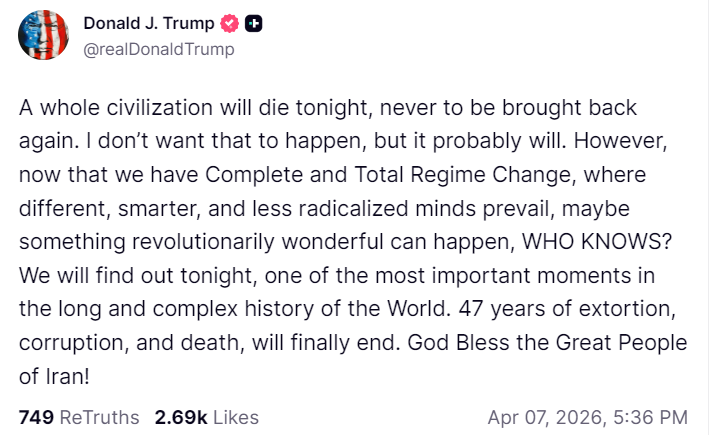
These are examples of evil, but one that is overt, and inhuman in the way of which it is done. Nobody dramatically degrees that an entire race will be exterminated (except the president of the United States of America) anymore. Same goes for Pat Buchanan’s celebration of the gay deaths, or Rush Limbaugh’s own disgusting comments on the topic.

While loud expressions of evil are most readily remembered. It is often the more insidious types that go under the radar.
I want to talk about Hendrik Verwoerd.
Hendrik Verwoerd was prime minister of South Africa during the 1960s and the architect of Apartheid. He was the man who would put a system of racial discrimination into system government that affected the country in every sector of society. I had never listened to any of his speeches during my history studies until I was in my early 20s. I stumbled upon a recording of a speech where he gave his definition of Apartheid.
While the YouTube video has been privated now, I remember the experience of watching it vividly. While what he was describing was going to be a system of government that would systematically discriminate against the majority population and would eventually nearly cause a civil war.
But the way he talked was so calm, his tone reminded me of my grandfather. He was intelligent and well spoken, fluent in English at a native level. Compared to the crass self indulgent incoherent speeches of Trump or compared to the grandiosity of Mussolini his cadence was that of an ordinary man expressing an opinion of a friend.
Tone and cadence are very important to how your ideas are expressed. He was talking about the superiority of one person over another. He was creating the system of government that outlawed sexual relations between people based on pigment. But because of the way he pitched Apartheid, it sounded less abhorrent, and more reasonable. A policy of good neighborliness, a mutual understanding that two different groups of people simply cannot coexist.
It sounds normal if you weren’t paying attention to what he was saying. You might even agree on it on the surface because you know that sometimes cultures have a harder time integrating, some cultures have wildly different values etc.
I think that the importance of understanding the difference between the value of ideas and how they are delivered helps navigate the discourse. Discourse cannot exist in a vacuum, it occurs through the lens of historical, cultural and political influences. They are expressed through the wording and voice. Is there dishonesty through the use of metaphor and tenderness of tone when arguing for atrocities? Do they calmly explain why certain people shouldn’t exist or should be killed? Do they refer to groups as pests?
These are questions you should consider when navigating discourse, listen to what they are saying, interpret the meaning of the words they say. What is the purpose of their tone in the speech? Evil isn’t always obvious, evil can be subtle and indifferent in its argument. Including a dispassionate expression of dismissal towards the person. It might even sound reasonable and understandable.
But one needs to be alert and aware of the language and tone of the utterance by the utterer. For in a world where the words are power, to know how one says the words unlocks a whole new way of navigating discourse and preventing evil from festering within it.
References
Evon, Dan. 2021. “Did Rush Limbaugh's 'AIDS Update' Mock the Deaths of Gay People?” Snopes. https://www.snopes.com/fact-check/rush-limbaugh-mock-aids-gays/.
Washington Post. 1989. “The Washington Post.” PAT BUCHANAN'S GREATEST HITS. https://www.washingtonpost.com/archive/politics/1987/02/04/pat-buchanans-greatest-hits/416e2224-f7cd-4271-8c9d-0712712df6f3/.